French literature

Rembrandt, Self-Portrait (detail), 1652. Kunsthistorisches Museum, Vienna.

“They say that the Sun’s light is not a continued and uninterrupted brightness,
but that it darts its rays successively, so very thick and so close, one in the neck of another, that we do not perceive the interval. So our soul darts forth its thoughts, one after another, imperceptibly. We have pursued the revenge of an injury with the utmost resolution, and yet at last we weep; it is not for the victory we have gained that we weep;
nothing has happened more than we designed or expected; but the soul looks upon the thing with another eye, and represents it to us under another kind; for every thing has many faces and several aspects.”

Essays, I, ch. 38.
Self-knowledge

Montaigne had a single ambition: to know himself completely, and through himself, to know humanity. A skeptic, he did not begin from doctrines but reasoned from what he had seen, heard, or lived. Experience and anecdote stand at the center of the Essays. Montaigne talks endlessly about his tastes, his hands, his way of eating, walking, speaking, and so on. There is little metaphysics in his work.

In exploring human nature, Montaigne sees that man is a disordered creature. Our nature spontaneously inclines us toward absurdity and excess, to our own detriment and to that of others. All the more reason, then, to know ourselves, so as to guard against the snares of body and mind and live as well as we can.

Montaigne harbors no contempt for the body. At times, it is the body that must steady the mind—whether overactive or worn out—by teaching it the moderation it so often lacks. Our arms cannot lift more than their strength allows, he notes, yet the mind can weigh itself down with infinite worries. In this sense, Montaigne urges us to let the body serve as a model for the mind.

The Other

Although Montaigne often seems to talk only about himself, the Essays give remarkable space to others. First, he is fascinated by the newly discovered American continent, and rather than dismiss the lives of its “Indians” as barbaric, he grants them full dignity—even in their most unsettling practices, such as cannibalism. In a century bloodied by religious intolerance, this stance is nothing short of extraordinary.

Second, the Essays are always addressed, implicitly or explicitly, to his friend La Boétie—the ideal companion, lost too soon. Montaigne is never speaking into a void: he is speaking to someone, and almost with someone. He questions himself, anticipates objections, refutes himself, gathers testimonies, and ends by acknowledging that certainty escapes us. Nothing is further from his temperament than solitary dogmatism.

The other, then, is essential to the life of the mind. To sharpen our intelligence, we must “file our wits against those of others.” This is why he urges young people to travel and encounter different cultures. For Montaigne, stupidity is first and foremost a narrowing of perspective, a closing-in on oneself. Opening ourselves to others places us in the best position to become wiser: “A marvellous clarity comes to human judgment from frequenting the world.”

The language I love

“The language I love is simple and natural, in writing as in speech: a language that is nourishing and alive, brief and concise—less delicate and polished than vigorous and abrupt. I prefer it challenging to dull. (…) I dislike fabrics where you can see the seams and stitching. Just as with a beautiful body, one should not be able to count the bones and veins.”


Essays, I.26, “On the Education of Children”

Gustave Courbet, The Oak Tree of Flagey, Courbet Museum, Ornans.

“There is a certain respect that binds us, and a general duty of humanity—not only toward animals, who live and feel, but toward trees and plants as well. We owe justice to human beings, and grace and kindness to other creatures, insofar as they can receive them. There is a kinship between us and them, and some mutual obligation.”

Essays, II.11 (“On Cruelty”)

Nature

Nature was far more present and powerful in Montaigne’s century than in ours, yet he already insisted on the need to respect and care not only for animals but also for trees and plants.

He sees a continuity among plants, animals, and human beings—a relationship of “kinship,” and therefore “a certain mutual obligation” that binds us to other living creatures.

We like to believe ourselves the masterpiece of creation. But what do we really know about animals? With senses more acute—or simply different from ours—they may have access to dimensions of nature that remain hidden from us, and by that very fact may enjoy “a life fuller and more complete than ours.”

As human beings, we do not see nature as it truly is, but only as our limited senses allow. In this respect we have no privilege: like every creature, we are bounded by what our senses can grasp.

“We have formed a truth through the consultation and cooperation of our five senses; yet perhaps it required the agreement of eight or ten senses—and their contribution—to perceive it with certainty and in its essence.”

The conditions for dialogue

Reading Montaigne means gradually discovering the importance he places on speech and its role in binding human beings together. He is often called a skeptic, but as Bernard Sève—one of his finest interpreters—has shown, Montaigne outlines nine rules for any fruitful “conference” (discussion or dialogue):

  • Do not debate with the powerful.
  • Do not debate with fools.
  • Determine whether your interlocutor is a fool (an “idiot,” in modern terms)—and if so, end the discussion.
  • Keep to the order of the exchange (listen carefully, address objections, take previous statements into account, etc.).
  • Do not resort to insults, evasions, contempt, or anything that leads the conversation to a dead end.
  • Do not lie.
  • Speak “with head held high, with an open face and an open heart.”
  • Treat all proposals as worthy of consideration.
  • Accept being refuted.

Sonia Delaunay, Le Bal Bullier (1913), detail. Centre Pompidou.

“When I dance, I dance. When I sleep, I sleep.”
(Essays, III, 13)

Nothing could be simpler—and nothing could be harder.
That, in essence, is the project of the Essays: not to let ourselves be swept away by anxiety, vanity, self-image, or artifice, but to strive instead to inhabit ourselves fully and live in harmony with the world. A lofty ambition indeed.

Focus

How to deal with stupidity ?

Knowing how to recognize a fool

For Montaigne, before engaging in a serious conversation with someone, it is essential to determine whether the other person is a fool. If they are, any discussion will be pointless. Reasoning with a fool is useless: you do not suddenly become a musician, he says, simply because you have heard a good tune. Likewise, “there is no use preaching to the first passerby, or lecturing the first person you meet about their ignorance or ineptitude.”

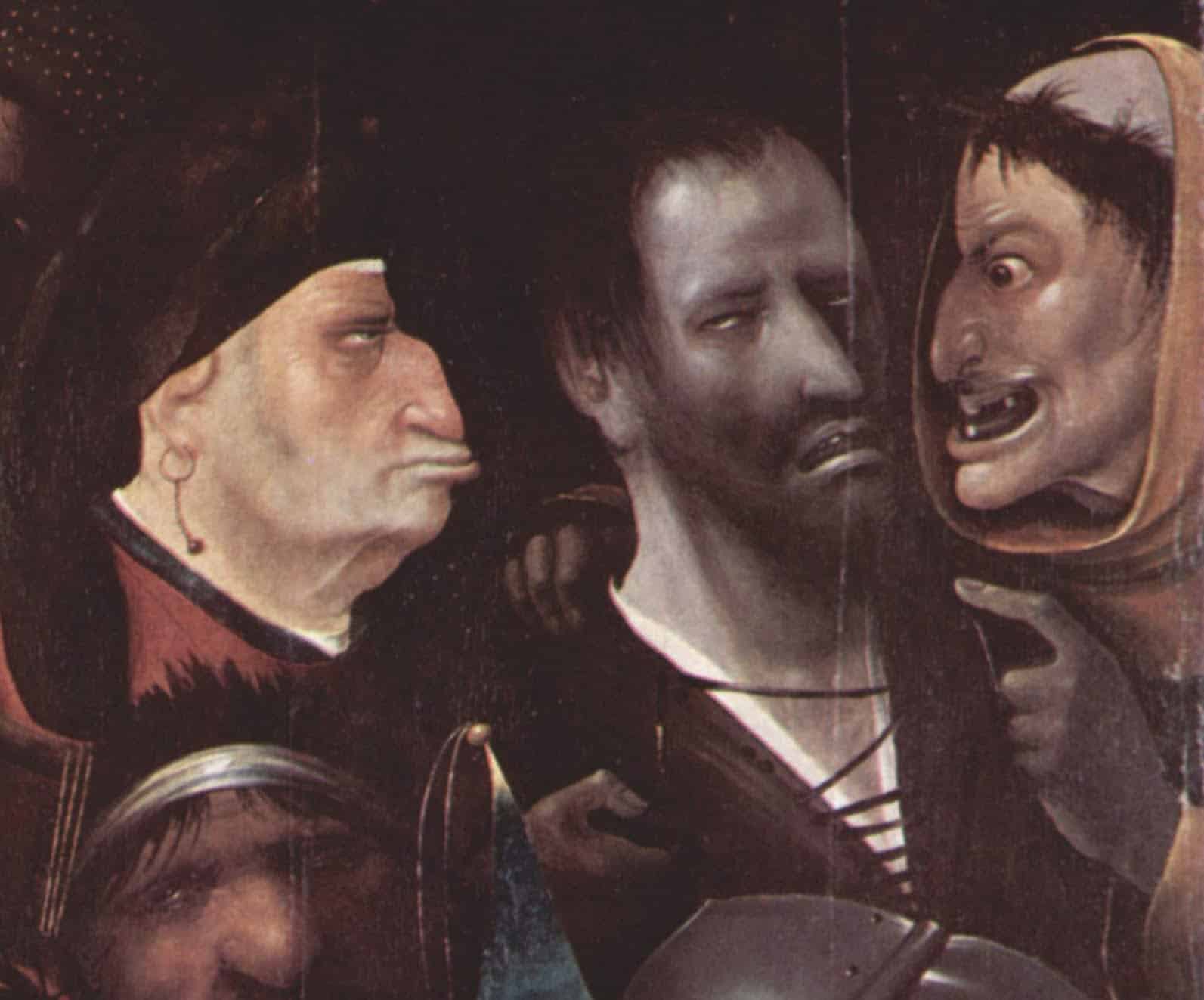
That said, fools sometimes utter a truth by accident. You therefore have to be cunning in order to unmask them. Montaigne offers a kind of strategy built around three key moves.

“Every day I hear fools say things that are not foolish. They say something good—so let us see how far they understand it, let us see how they take hold of it.”


Essays, III.8, “On the Art of Conversation”

1. Play dumb

If you have any doubts, do not follow the other person’s line of thought. Instead, pretend you do not understand. One of two things will happen:

  • either they manage to explain themselves clearly (which means they know what they are talking about),
  • or they get tangled up (which means they don’t).

But if you leap into the discussion too quickly, they will latch onto your interpretations, interrupt you with a triumphant “That’s exactly what I meant!”, and you will learn nothing about their actual thinking.

2. Ask for details

If your conversation partner puts forward a broad statement that sounds true—“Italy is a great country for the arts,” for instance—Montaigne suggests testing whether it is true by mere accident. Ask for something more specific: “Have them narrow their judgment a little—why is that so, and where?” You’ll quickly see whether the remark is simply being repeated like a parrot, or whether the speaker actually knows what they are talking about.

3. Judge by evidence

Ask them to describe something they has done—something they are genuinely pleased with—and ignore any false modesty such as “I rushed that job,” or “I did that ages ago.” No, says Montaigne: ask for something “that represents you well as a whole, something by which you would wish to be judged. And then, what do you find finest in your work? This part, or that one? The grace, the material, the invention?”

Your interlocutor, feeling at ease, will reveal themselves completely. And only then will you be in the best position to know who you are really dealing with.

***

SOURCES

Essays, Book III, Chapter 8: “On the Art of Conversation”.

“Exemplaire de Bordeaux”, annotated in Montaigne’s own hand.
(Bordeaux Municipal Library)