Literature is real life
César Franck, String Quartet in D minor (scherzo). Petersen Quartet.
Proust loved this quartet so much that he had it played at night just for himself.
La vie de Marcel Proust
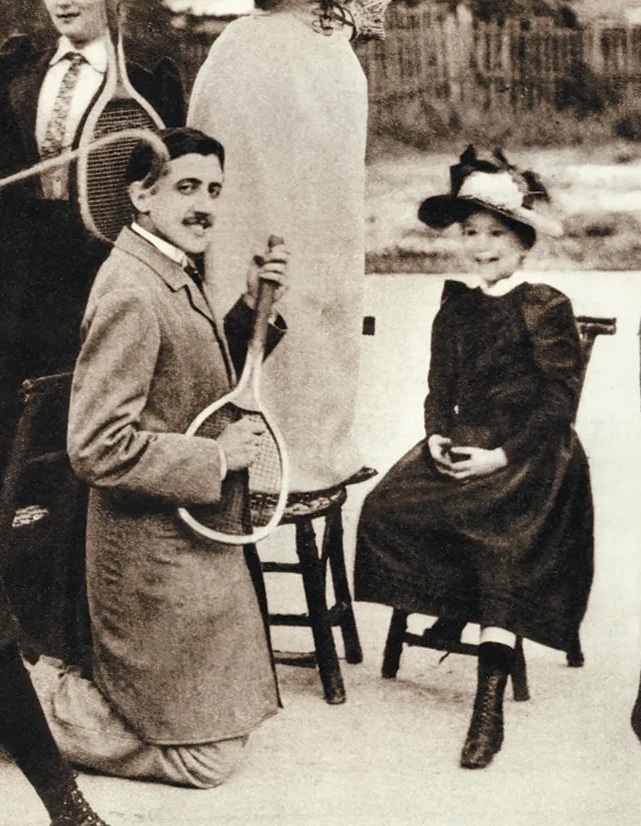
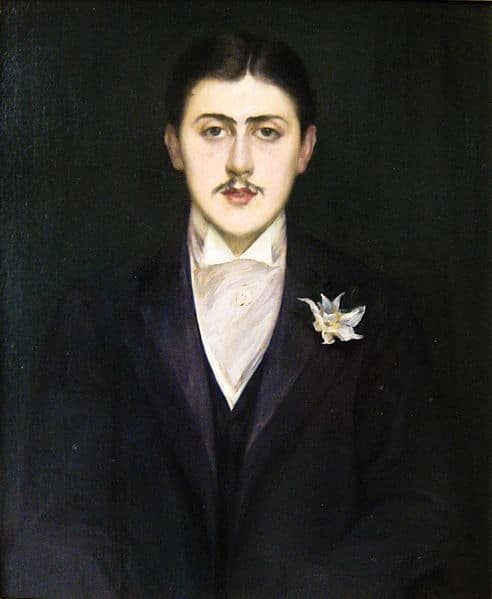
Jean Cocteau remembers Proust…
A high-society youth
Marcel Proust was born in July 1871 in Paris, to a doctor father and a mother from the cultured Jewish bourgeoisie. Extraordinarily sensitive and fragile, he grew up sheltered in a hushed atmosphere, terrorized by violent asthma attacks that threatened to take his life every year when pollen season arrived. Proust’s life was not that of an adventurer. After his studies, he was introduced to the Parisian salons of the upper bourgeoisie, wrote society columns in Le Figaro, and published a collection of poems and short stories, Les plaisirs et les jours, which was so poorly received by critics that Marcel challenged one of them, the formidable Jean Lorrain, to a duel. Among writers, he was considered a somewhat snobbish rentier with literary ambitions, intelligent but lacking substance.
Immersion in writing
His father died in 1903, his mother in 1905. For Marcel, this was a source of immense grief, but perhaps also a form of emancipation. From then on, he really got down to work, shutting himself away and beginning the work that would become In Search of Lost Time. Sleeping during the day and working at night, helped by his maid Céleste Albaret, who lived with him in seclusion, he rarely went out and only at odd hours, living solely for his work. The first volume, Swann’s Way (Du côté de chez Swann), was published in 1913. Driven by extraordinary persistence and racing against illness, Proust went on to publish In the Shadow of Young Girls in Flower (À l’ombre des jeunes filles en fleurs, also translated as Within a Budding Grove), The Guermantes Way (Le Côté de Guermantes), and Sodom and Gomorrah (Sodome et Gomorrhe, formerly also translated as Cities of the Plain). Exhausted by his work and deteriorating health, Marcel Proust died in 1922.
After his death, the final volumes of In Search of Lost Time were published: The Prisoner (La Prisonnière, sometimes translated as The Captive), The Fugitive (Albertine disparue, also known as Albertine Gone), and Time Regained (Le Temps retrouvé).
Proust and his time
Even though he refers to key events of his time, such as the Dreyfus affair and World War I, Marcel Proust is not a conscience of his time in the same way that Zola was, for example: nor does he seek to paint a broad picture of the different classes of society, as Balzac did. Neither realist, symbolist, Parnassian, nor decadent, how can Proust be linked to his time?
An unclassifiable work
Defying any known novelistic category, the manuscript of Swann’s Way (Du côté de chez Swann) was met with complete incomprehension when it reached the publisher Fasquelle. The reviewer — a certain Jacques Madeleine (you couldn’t invent a better name!) — concluded:
After wading through the seven hundred and twelve pages of this manuscript (…) having endured an endless sense of desolation at being drowned in impenetrable digressions, and an agonising impatience at never coming up for air, one is left with no idea what it is about. What does any of it mean? Where is it leading? It is impossible to tell!
To be fair, this is a feeling some readers might still experience today when first encountering Proust. But insightful readers quickly understood the ambition of Proust’s project and sensed that only the whole would illuminate the parts. As his support and recognition grew, he was awarded the Prix Goncourt in 1919 for In the Shadow of Young Girls in Flower (À l’ombre des jeunes filles en fleurs). History would later reveal just how radically he had altered the course of literature.
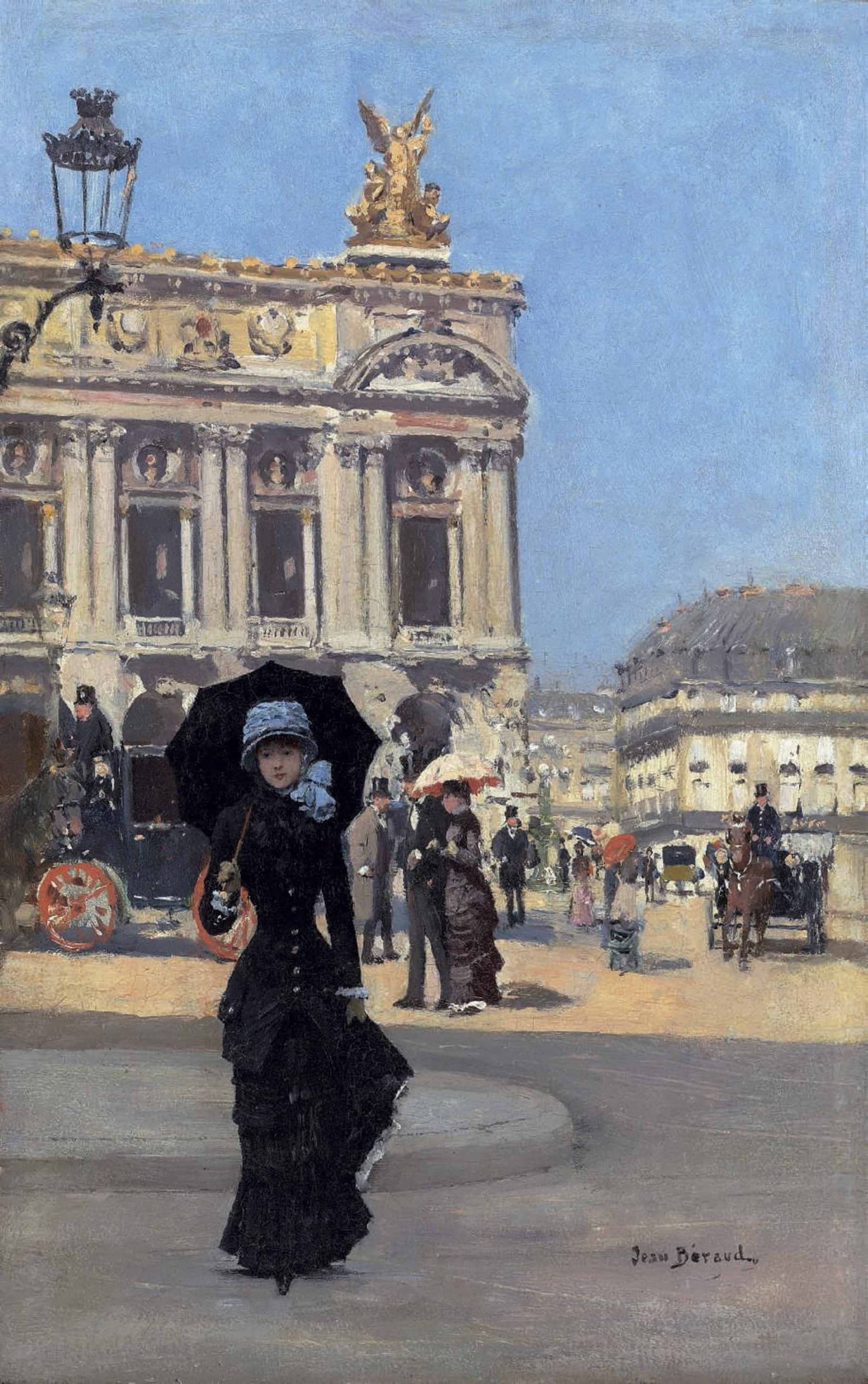
Emmanuel Berl recalls how Proust attempted to impose his worldview on him…
His place in literary history
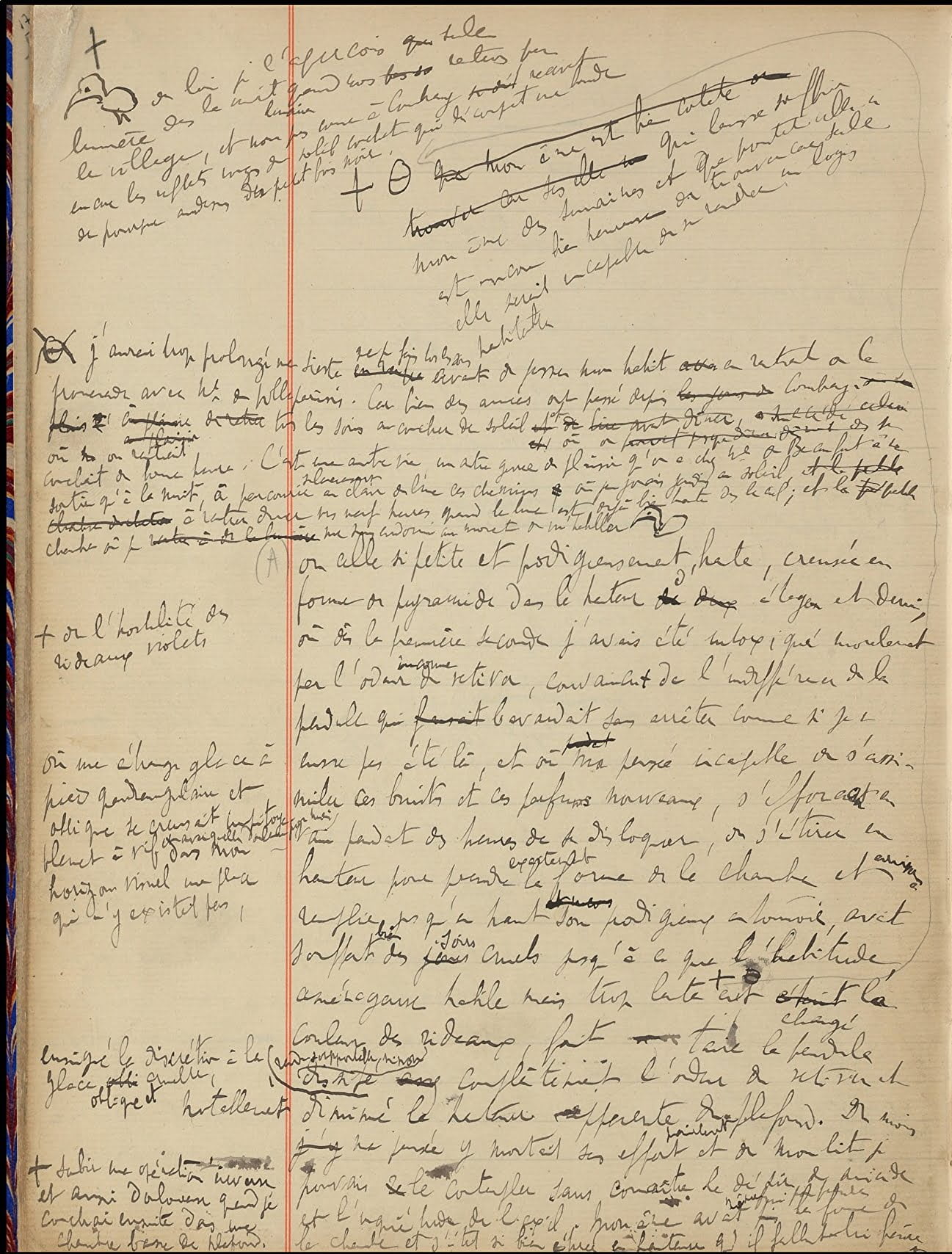
Although initially met with bewilderment, Proust’s work soon came to be recognized as groundbreaking. Today, In Search of Lost Time is one of the most studied literary works in the world, and his reputation has only continued to grow — without ever undergoing a period of rejection or neglect (as Gide did, for example).
Our contemporary
In Search of Lost Time does not fit neatly within a single movement. In fact, it draws upon several genres — the study of manners, memoir, and psychological novel — and can be seen as inaugurating modern literature through its fusion of forms. Freed from a plot that becomes largely incidental, Proust assumes that the purpose of literature (and of art more broadly) is not to entertain, but to show and make us feel life in its truth — directing our gaze precisely where laziness, habit, and convention normally turn it away.
Why Proust is an extraordinary writer
Regardless of his historical significance, Proust is a truly extraordinary writer. His prose casts a wide net, as if to catch every sensation and thought. It unfolds in long, swirling sentences — laden with parentheses and digressions — in order to convey the full nuances of the narrator’s perceptions and ideas. Through these successive layers of depth, he draws us out of our habitual ways of thinking and opens new dimensions of reality.
His psychological insight and evocative power are so remarkable that he gives us the impression of inhabiting the world he describes and of knowing his characters to their innermost depths. Finally, apart from Flaubert — to whom he owes so much — no author is more attentive than Proust to both detail and overall architecture, weaving connections, echoes, and symmetries that often span the entire work.

“And, like an aviator who had been struggling on the ground until then, suddenly ‘taking off,’ I slowly rose toward the silent heights of memory.”
Time Regained (Le Temps retrouvé)
Céleste Albaret, Proust’s maid, recalls the final phase of the writer’s work.

All audio excerpts are taken from Roger Stéphane’s 1962 documentary Proust: Portrait-Souvenir.
Excerpts (in french)
1913

Swann's way
In this opening milestone of In Search of Lost Time, the narrator recalls his childhood. His fascination with Swann, Aunt Léonie, and Gilberte emerges through deeply evocative and exquisitely subtle impressions. The book ends with Swann’s Love (Un amour de Swann), a self-contained novella embedded within the larger work.
-
La madeleine
Du côté de chez Swann - 1913
-
La cuisine
Du côté de chez Swann - 1913
-
Le salon Verdurin
Du côté de chez Swann - 1913
-
Madame Verdurin sur son perchoir
Du côté de chez Swann - 1913
1918

In the Shadow of Young Girls in Flower
Winner of the 1919 Prix Goncourt, In the Shadow of Young Girls in Flower (À l’ombre des jeunes filles en fleurs, also translated as Within a Budding Grove) immerses us in the narrator’s emotional and sexual awakening. Much remains mysterious to him — not least the behavior of the enigmatic Baron de Charlus.
-
Charlus tente sa chance
A l'ombre des jeunes filles en fleurs - 1918
-
Apparition du temps
A l'ombre des jeunes filles en fleurs - 1918
1921

The Guermantes Way (I and II)
A social satire tinged with often tragic humor, The Guermantes Way (Le Côté de Guermantes) evokes the end of adolescence in a world unsettled by the upheaval of the Dreyfus Affair.
-
La mort des autres
Le côté de Guermantes I - 1921
1923

The Prisoner
What is love? “Mutual torture,” according to the narrator, who leads us through the paradoxes of his obsessive love for Albertine — a love both tyrannical and fragile.
-
Albertine endormie
La Prisonnière - 1923
-
La mort de Bergotte
La Prisonnière - 1923
1923

Sodom and Gomorrah (I and II)
More than in any other part of the work, Proust examines identity and the subversive force of desire at odds with social order. In this section, the narrator voyeuristically observes the sexual encounter between Charlus and Jupien.
-
Charlus et Jupien
Sodome et Gomorrhe I - 1924
1925

The Fugitive
What is a breakup? Why does the memory of the beloved fade? What conclusions can we draw about love? The Fugitive (Albertine disparue, also known as Albertine Gone) is a stark meditation on the impermanence and self-deception at the heart of love.
-
Une divinité redoutable
Albertine disparue - 1925
-
Amour imaginaire
Albertine disparue - 1925
1927

Time Regained
The circle comes full, and the narrator — at the end of his destructive odyssey — transcends bitterness to poetically recreate the world and finally enter “real life.”
-
Les échasses du temps
Le temps retrouvé - 1927