The joyful science
The life of François Rabelais
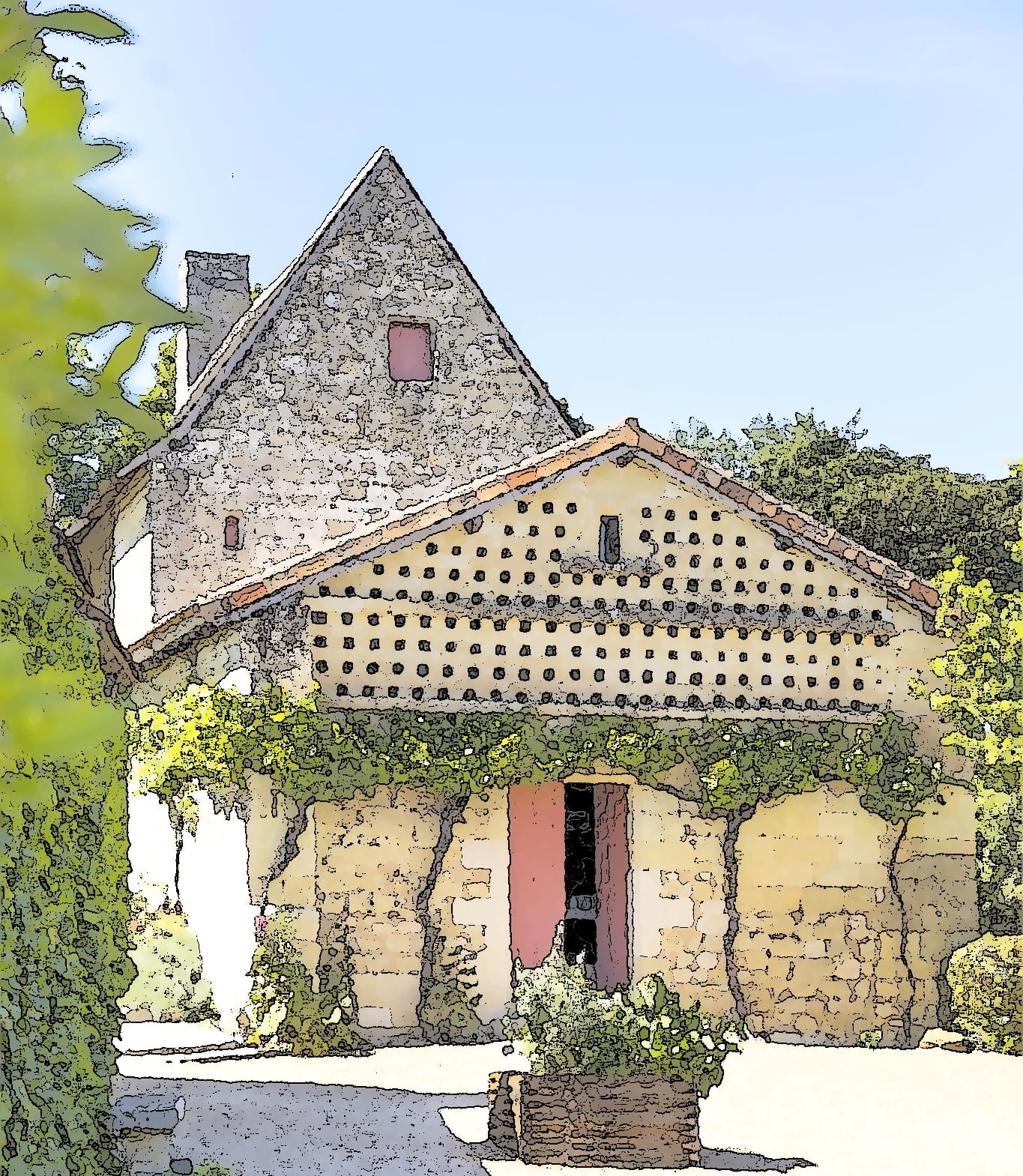
François Rabelais was born in 1483 (or 1494 — the date remains uncertain) in La Devinière, a house near Chinon in Touraine that still stands today. At a fairly young age, he entered monastic life, first with the Cordeliers in Fontenay-le-Comte and later, in 1524, with the Benedictines. During this time, he immersed himself in the study of ancient languages, particularly Greek, in which he became highly erudite.
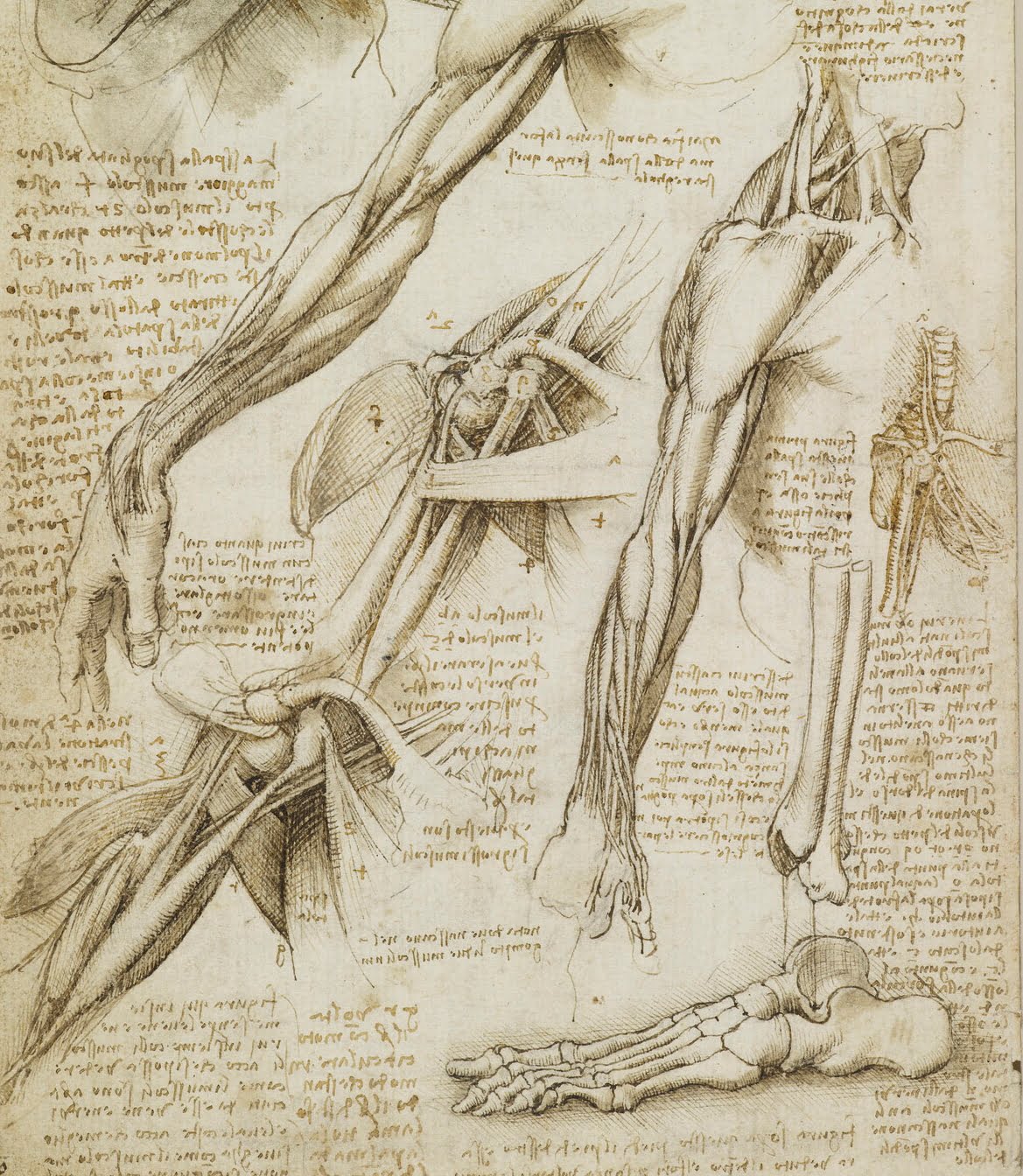
Rabelais eventually left the monastery to study medicine at the University of Montpellier, then one of the most prestigious institutions in Europe, and he became a physician in 1537. Along the way, he came under the patronage of powerful figures, including the future Cardinal Jean du Bellay, uncle of the poet Joachim, and he traveled widely, spending time in Lyon and making several extended stays in Italy.
In 1532, he published Pantagruel, followed by Gargantua around 1534. By then, François Rabelais had become famous, influential, and well protected. He was regarded as a prominent medical authority, whose advice was sought in difficult cases — and not only in medical matters. His patrons even entrusted him with confidential missions.
Censorship and travel
But the intellectual climate of the Renaissance was changing. Institutions began to crack down more harshly on writers who were too free-thinking. Atheists and heretics were burned at the stake in Place Maubert in Paris. The Third Book, published in 1546 with the king’s privilege, was censored by the Sorbonne. Cautiously, Rabelais fled to Metz and later undertook another journey to Rome, where he devoted himself to the study of Arabic. The Fourth Book was published in 1548 and likewise censored. Despite the risks, the writer’s life was probably quite comfortable at this time, thanks to the income from church benefices granted by his friend, the Cardinal. Rabelais died in Paris in 1553. His success was such that a Fifth Book was soon published posthumously, although he was not its sole author.
“That being settled, I return to my barrel. Let’s drink this wine, friends. Children, drink your fill. If you don’t like it, leave it. I am not one of those annoying busybodies who force their companions to drink, even down to the last drop, by force, insult, and violence.”
Third book, prologue
Rabelais in his time
The sixteenth century in France was an age of protest. The defining event was Martin Luther’s break with religious institutions, an attempt to restore a more evangelical form of Christianity. Rabelais was no exception to this spirit of dissent. Although he did not align himself with either the Lutheran or Calvinist movements, he fiercely denounced clerical corruption, decaying institutions, and the senseless violence of his time.
The Renaissance was also a period of insatiable intellectual appetite. Humanist learning often took the form of a kind of joyous frenzy—a feverish rediscovery of the great texts of antiquity, now made accessible to a broader audience thanks to a world-changing invention: the printing press.
A monk, then a physician, lawyer, philologist, diplomatic emissary, and writer, François Rabelais embodied both the humanism of his age and a boundless thirst for knowledge—at a time when a man could still dream of mastering it all.
“Seeing your grief consume and waste you away,
It is better to write of laughter than of tears,
For laughter is the property of man.”
— Gargantua, “To the Reader”
His place in literary history
Rabelais fell into obscurity for quite some time. In the seventeenth century, literature moved in the opposite direction to his. The body and its pleasures were banished. Boisterous laughter gave way to polite smiles. Moderation, restraint, and refinement became the watchwords: giants and overflowing banquets no longer had a place. The literary tastes of the seventeenth and eighteenth centuries could not accommodate Rabelais’s excess, rawness, and exuberance.
The father of the novel
It took the distance of the nineteenth century to recognize his genius and his place in literary history. He came to be acknowledged as the true father of the modern novel. Flaubert read him almost daily throughout his life; as a young man, he even wrote a study on Rabelais, which attests both to his pleasure and his admiration. Once readers stopped treating Rabelais’s works as cryptic chronicles, they began to appreciate the vastness of his project. From then on, his voice carried louder and farther. One of the most moving tributes came from the Japanese writer Kenzaburō Ōe, who, in his 1994 Nobel Prize acceptance speech, paid heartfelt homage to François Rabelais:
The importance of material and physical forces; the intimate relationship between cosmic, social, and bodily elements; the intertwining of death with a passion for regeneration; bursts of laughter capable of overturning all apparent hierarchies — these systems of imagery opened for me, born in a periphery called Japan, and moreover in a peripheral region of that country, a path of expression toward universality, while allowing me to remain rooted in that periphery.

“Those who have claimed to provide keys to understanding Rabelais, to see allegories in every word, and to translate every joke have, in my opinion, failed to understand the book. The satire is general, universal, and not personal or local.”
Gustave Flaubert
Why Rabelais is an extraordinary writer

François Rabelais is a writer who takes every liberty. He is prodigiously inventive. His narratives unfold as scholastic disputations, epic poems, endless catalogues, and fantastical journeys, all written with utter freedom. Driven by the sheer joy of writing, he happily disregards convention, narrative logic, and even plausibility. His exuberant prose bursts like a firework display for the eyes and ears — like the frozen words in the Fourth Book, trapped in winter ice, thawing with heat and “crackling as they melt.”
“After receiving and reading these letters, Pantagruel took heart once more and was set ablaze with the desire to make greater progress than ever before. So much so that, watching him study and advance, one would have said that his mind among the books was like fire amid dry brushwood, so tireless and crackling was it.”
— Pantagruel, ch. VIII
Œuvres principales - Extraits
Les extraits sont transcrits tels quels sur la colonne de gauche (orthographe légèrement modernisée), et traduits en français moderne sur la colonne de droite.
-
L'abbaye de Thélème
Pantagruel - 1532
-
Les fouaces
Gargantua - 1534
-
Frère Jean des Entommeures I
Gargantua - 1534
-
Frère Jean des Entommeures II
Gargantua - 1534
-
Six pèlerins en salade
Gargantua - 1534
-
Les alliances
Le Quart Livre - 1548
-
Les paroles gelées I
Le Quart Livre - 1548
-
Les paroles gelées II
Le Quart Livre - 1548